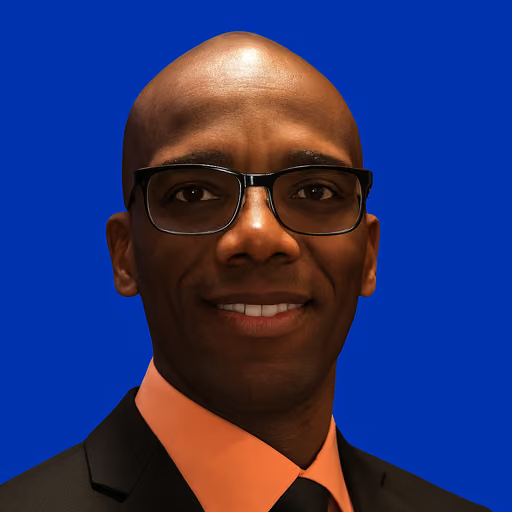
Ervin

Tutoring Since 2020

I am an educator and nationally-acclaimed writer with years of experience as a classroom teacher, writing mentor, and college essay specialist. I’ve helped students from sixth grade to graduate level feel more confident in their writing and get accepted to top universities. I was once a young kid struggling with reading disabilities myself, so I understand the impact of choosing the right academic mentor.
Tutoring Style
What I’ve experienced, and what I believe most experience, is confusion about the writing process. Every student has more than their fair share of brilliant ideas, but putting them on paper feels like painting a masterpiece when you don’t know how to paint. That’s why I want it to be a collaborative effort to set the rules. What are the real goals of our writing? After we decide what is most important for us to share, much of my work with the student will be to decide how best we organize, brainstorm, and turn ideas into comprehensive pieces of writing. Then, after the shape of the essay is complete, nitpicky details like grammar and sentence structure come last. It doesn’t take artistry to make a great essay. It simply takes planning and a little bit of guidance.
Success Story
I had a student set on sounding like the smartest applicant in her college essay. She boasted her academic achievements like stellar grades and club presidencies, but we mutually found her essay to be flat. So instead of nitpicking the details and reorganizing, we came back to the most important question: what are the real goals of our writing? The student explained that she wanted to showcase her true self. So we talked for a bit, just about her, and she told me a story about how she helped her sister win a pickleball tournament without ever having played. That essay got her into an Ivy League school. It was a hilarious story, but most importantly, it impressed the admissions board that she was a supportive sibling, creative thinker, and strong leader. From that point on, I've always coached that authentic responses were superior to those crafted to please others.
I coached a senior in college who was just obsessed with science fiction, and was applying to a graduate school program for writing. The only problem was that she majored in chemistry, not English. She loved to read and write, but had no academic background in the literary arts. Consensus told her that applying to writing programs with no formal background in writing would be a waste of effort. I met with her several times, reviewed her related experience, organized a portfolio of her science fiction work, and introduced her to some of the faculty in the graduate program. What she had thought unmemorable to share at the time was that she won second place in a fiction contest her sophomore year, an incredible feat to the faculty since they had rarely ever given the award to a non-English major. Later that semester, she came back to share the news of her acceptance, and I was overjoyed. Sometimes coaching applicants is as easy as helping them believe in themselves, in them the same way you would want people to believe in you.
Hobbies & Interests
I enjoy skateboarding in the park, playing basketball with friends, and reading literary magazines. Recently, I’ve been trying to get faster at solving a Rubik’s Cube.
ELA (Language Arts):
- Phonics
- Reading
- Handwriting
- Reading Comprehension
- Vocabulary
- Spelling
- Grammar
- Speech
- Common Core English
- English I
- English II
- English III
- English IV
- Honors English
- AP English Language & Comp
- AP English Lit & Comp
- Literature
- Composition
- Creative Writing
- Essay Writing
- College Essay Writing
- Spelling Bee Prep
- Writing
- Middle School ELA
Related tutors:


.avif)

























.png)
Tutoring subjects: